
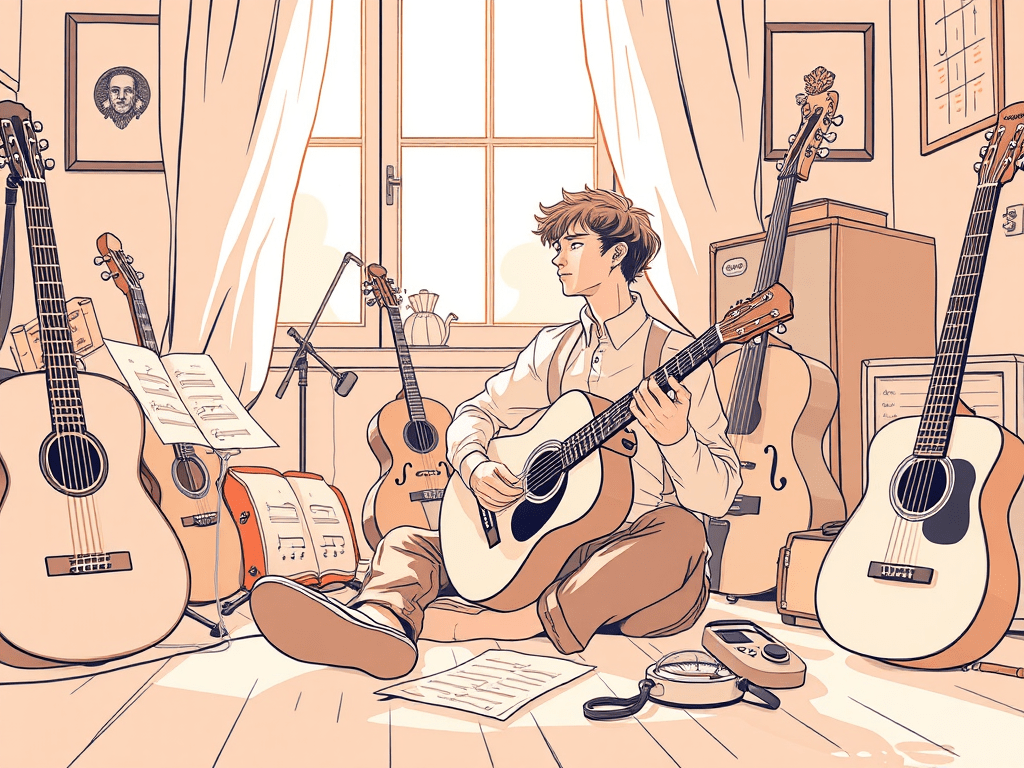
There are different reasons, and corresponding approaches, to picking your instrument up, and it’s important that you’re intentional about which method you choose. If you play for fun during practice time, you hurt your progress. If you work during playtime, you ruin the enjoyment. If you practice during rehearsal time, you annoy your bandmates! (haha)
When you play for fun and enjoyment, you don’t want any structure. Just let loose and do whatever you feel. That’s probably the most beneficial part of learning an instrument. It’s therapeutic, cathartic, expressive and fun.
On the other hand, in order to build the skills necessary to having fun, you need to get down to business and work. Sometimes even being consumed in the process of practice can be therapeutic, but other times it feels like work. Discipline is another important benefit you get from learning and instrument. You set goals, work towards them, and enjoy your success in the end. This habit flows over into other areas in your life too!
I see it too often: A student will start learning a song and they immediately try to make it sound like the song. They struggle, rush themselves, make tons of mistakes. This is an example of confusing play with practice. The first goal is to just learn the notes or chords or strumming patterns. This shouldn’t sound like the song yet. It should sound like practice: slow, repetitive, incomplete sections, exercises, maybe a couple grunts or deep breaths. Rhythm or “making it sound like the song” is the very last thing you do.
It’s also important to spend a substantial amount of time on each method. You want to avoid switching between practice and play too soon. Spend a good 10+ minutes on each small goal.
The point is, you want to separate these different modes. Be intentional about what you’re doing. If you’re feeling fired up and motivated to improve your skills, set a goal to work for most of the session. If you want to just play, then just play for however long you want. If you want both, then make time for both. Keep them separate though.
 J Holguin Music
2 responses to “Practice vs Play”
Great perspective
LikeLike
[…] I don’t need to teach anyone how to play and have fun. You just do it. Maybe I can suggest games or other fun things to do, but having fun is an inherent skill we all pick up early in life. Make sure you use it so you don’t lose it! I mention it as a separate section here because of it’s importance, and also to remind you to separate play from practice. I have another blog that elaborates about this, check it out here. […]
LikeLike